Ghana Aviation News
The International Air Transport Association (IATA) has urged the International Telecommunication Union (ITU) to ensure that expanding 5G and emerging 6G networks do not interfere with critical aircraft safety systems, warning that temporary safeguards will expire in key markets within months.
IATA submitted a working paper to the ITU WP5B Meeting in Geneva this week, outlining operational scenarios and safety requirements that must guide future spectrum policy ahead of the World Radiocommunication Conference 2027. The conference will establish long term frameworks for protecting essential aviation systems while enabling future telecommunications connectivity.
Nick Careen, IATA Senior Vice President Operations, Safety and Security, emphasized that aviation safety cannot be compromised. “The benefits of 5G and 6G can never come at the cost of aviation safety,” he stated. “Spectrum decisions must be based on real world aircraft operations, not idealized telecommunications industry modeling.”
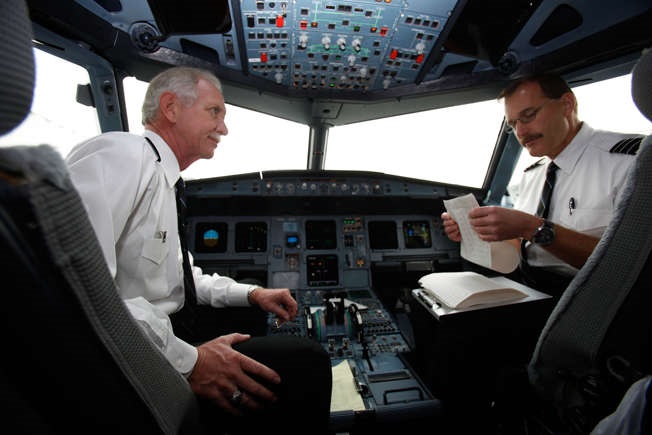
The appeal addresses mounting concerns about radio altimeters, which measure an aircraft’s height above terrain during critical flight phases. These instruments operate in the 4.2 to 4.4 gigahertz frequency band, directly adjacent to certain 5G transmissions that can potentially cause interference.
IATA’s paper calls for future spectrum policy to consider all key safety scenarios, including takeoff, landing, taxi and go arounds, adverse weather conditions such as turbulence and windshear, and emergency or off nominal situations. Radio altimeters provide essential height information in all these conditions and support both flight crews and automated safety systems.
The association reaffirmed the importance of maintaining a minimum separation of 35 feet, or 11 meters, between aircraft and terrestrial 5G transmitters.
Telecommunications providers in several countries have voluntarily implemented mitigation strategies to reduce potential interference. These measures include reducing transmission power, applying runway exclusion zones and tilting antennas downward. However, many of these temporary arrangements are approaching expiration.
In Canada, key mitigations will lapse on January 1, 2026, while in Australia they end on April 1, 2026. In the United States, plans to auction the Upper C Band spectrum between 3.98 and 4.2 gigahertz are advancing this month, with existing 5G mitigations scheduled for removal in 2028.
The timeline creates a significant challenge for the aviation industry. Next generation radio altimeters that are more resistant to 5G interference are not expected to be available to airlines before the early 2030s. This gap between the expiration of current protections and the availability of upgraded equipment has raised serious operational concerns.
IATA estimates the cost to airlines for temporarily mitigating 5G interference has already reached $650 million. This figure will rise substantially once airlines begin installing new equipment, considering not only the cost of upgraded altimeters but also downtime for installation and potential supply chain constraints.
Careen highlighted the urgency of the situation. “Current 5G mitigations were never designed as a long term solution and several will expire within months,” he noted. “At the same time, more resilient radio altimeters will not reach airlines until the next decade. That leaves a significant mitigation gap.”
He added that with new spectrum auctions underway and protections being lifted in key markets, regulators must not assume safety will take care of itself.
Radio altimeters serve multiple functions beyond measuring height during landing. They provide essential data for ground proximity warning systems and other avionic systems throughout flight operations. Without adequate protection from interference, these systems face potential degradation that could compromise flight safety.
If radio altimeters cannot operate freely, numerous challenges can occur, from degradation or loss of navigation signals to compromised flight operations. Pilots and controllers may need to use alternate and less efficient operational procedures, while aircraft might have to hold or reroute if navigation is compromised. Without interference mitigations, some aircraft types could even be prohibited from using specific runways or landing procedures, especially during low visibility conditions.
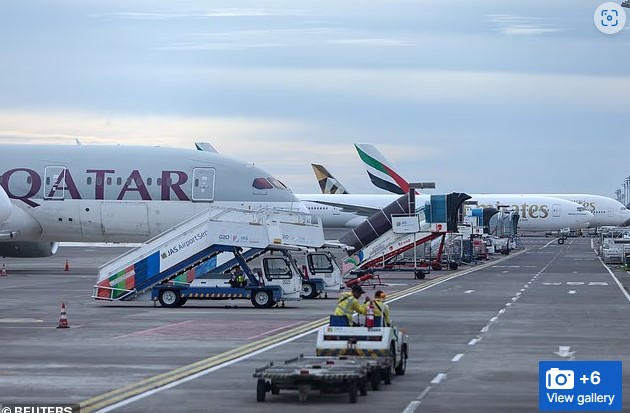
The activation of 5G in 2022 brought significant challenges to airlines, particularly in the United States, as the allocated spectrum is adjacent to aviation’s radio altimeter band. To temporarily resolve interference issues, US telecommunications providers entered into a voluntary agreement to establish buffer zones, limit radiated power and tilt antennas downward at 188 US airports.
The World Radiocommunication Conference 2027 will play a crucial role in establishing global standards for spectrum use. The conference, conducted under ITU auspices, will determine technical conditions for global 5G and 6G deployment through guidance developed with national telecommunications regulators and aviation safety authorities.
IATA emphasized that solutions must reflect actual operational conditions rather than theoretical models. The association argues that protecting aviation safety frequencies requires international coordination to prevent a patchwork of inconsistent national policies that could complicate global airline operations.
The telecommunications industry continues to pursue additional bandwidth allocations to support growing data demands and prepare for 6G networks expected within the decade. Balancing these requirements with aviation safety needs presents regulators with complex technical and policy challenges.
Airlines have begun upgrading radio altimeters, but the additional spectrum filtering requires mitigation measures to remain in place during the transition period. Supply chain issues represent a major concern, as downtime for fitting new equipment must be carefully managed. Radio altimeter antennas may also need replacement in addition to the black box units themselves.
Looking ahead, much depends on timely avionic innovation keeping pace with telecommunications advancements. Developing and deploying spectrum efficient, interference resilient communications, navigation and surveillance technologies will be essential to continued support of safe and efficient flight operations.
IATA stressed that while aviation works toward strategic long term solutions, telecommunications operators and regulators must maintain interference safeguards, especially near airports where safety margins are tightest. The industry needs clear, consistent protections to bridge the period before upgraded altimeters become widely available across global fleets.
The conference in 2027 represents a critical opportunity to establish harmonized international standards that balance technological advancement with uncompromising aviation safety requirements.